
How Much Down Payment Do You Need to Buy a House in Oregon?

Published
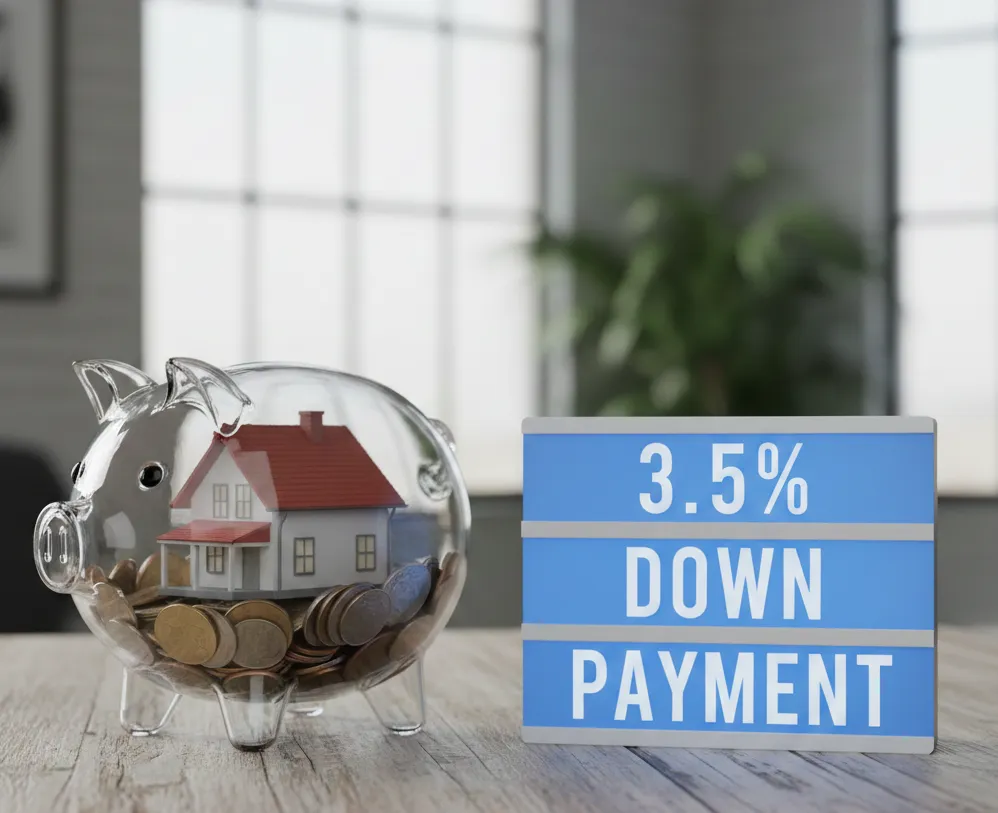
Quick answer
You don't need 20% down to buy a house in Oregon. Many loans allow much smaller down payments, and plenty of buyers who could put 20% down choose not to. If you put less than 20% down on a conventional loan, you'll pay private mortgage insurance (PMI), which is often lower than people expect with strong credit and can be removed later. The right amount depends on your monthly payment, your savings after closing, and how long you plan to stay.
In this article
- What do 3%, 5%, 10% and 20% down look like in dollars?
- What is PMI, and how much does it really cost?
- The PMI tip almost nobody explains: it’s priced in brackets
- Can family help with your down payment?
- What about Oregon down payment assistance programs?
- How much down do you need for a jumbo loan?
- Is your down payment the same as your cash to close?
- How do you choose the right down payment for you?
- Want to see your real numbers?
Most people think you need 20% down to buy a house in Oregon. For a lot of buyers, it’s much less than that. After 25 years of helping buyers make this decision, here’s what different down payments actually look like in real dollars, and a few things I’ve learned along the way.
What do 3%, 5%, 10% and 20% down look like in dollars?
Percentages are hard to picture, so here’s an example home price of $550,000:
| Down payment | Amount on a $550,000 home |
|---|---|
| 3% | $16,500 |
| 5% | $27,500 |
| 10% | $55,000 |
| 20% | $110,000 |
Example only. Not an offer of credit. Minimum down payments vary by loan program and eligibility.
That’s a big range. And 20% isn’t a requirement. Plenty of buyers put down less, and plenty of buyers who could put 20% down choose not to. So the real question isn’t just “what’s the minimum?” It’s what a smaller down payment means for your monthly payment, and that brings us to PMI.
What is PMI, and how much does it really cost?
If you put less than 20% down on a conventional loan, you’ll pay private mortgage insurance, or PMI. It’s a monthly charge that protects the lender, not you, because you’re putting less down. It’s not a penalty. It’s just how lower down payment loans work.
What surprises people most is how low it can be. If your credit is strong, PMI is often a lot less than people expect. I recently worked with a couple buying a home for about $540,000. They put 10% down, and their PMI came out to about $52 a month. The money they didn’t put down? They’re using it to renovate the house exactly the way they want it.
Actual client example. Your PMI will depend on your credit, down payment, and loan.
Does PMI go away?
On a conventional loan, yes. Once you’ve built enough equity, you can ask to have it removed, and eventually it drops off on its own.
A few years ago, when home values were climbing fast, many of my clients refinanced and saved twice: they got a lower rate, and their PMI disappeared because their home was worth so much more.
You can also order a new appraisal to try to remove PMI early. But if your PMI is already low, and there’s no guarantee the appraisal comes in high enough, the math doesn’t always make sense. It’s worth running the numbers first.
How is FHA mortgage insurance different?
FHA loans have their own mortgage insurance, and it can stick around much longer, sometimes for the life of the loan. That’s why it’s worth comparing what each option really costs, month by month, before you choose. Here’s how FHA and conventional loans compare.
The PMI tip almost nobody explains: it’s priced in brackets
PMI pricing works in tiers based on your down payment. Putting 5% down and putting 7% down often land in the same PMI bracket. So that extra 2% doesn’t lower your PMI at all. It lowers your payment a little and drains your savings.
If you’re going to put more down, it usually makes sense to go far enough to reach the next bracket. Otherwise, you’re paying for that bracket anyway. I can show you exactly where those lines fall for your situation.
Can family help with your down payment?
Absolutely. Honestly, I think gift funds might be the most underused way to come up with a down payment. Lenders are usually very generous about how much family can give you toward a home.
Here’s how it works:
- A family member gives you money toward the down payment.
- They sign a simple gift letter saying it’s a gift, not a loan you have to pay back.
- The money is documented: where it came from, and where it went.
And if a gift landed in your account and you forgot to mention it, it’s usually not a big deal. A short letter of explanation typically takes care of it. Just tell your mortgage broker as soon as you can.
What is a gift of equity?
It’s an option a lot of people have never heard of. If you’re buying a home from a parent or another family member, they can sell it to you for less than it’s worth, and that difference can count toward your down payment. Depending on how it’s set up, you might need very little cash out of pocket, sometimes almost none. It’s one of the best ways I know to get into a home, and very few people ask about it.
What about Oregon down payment assistance programs?
They exist, but they often come with tradeoffs, like a higher rate or extra fees. For most buyers with steady income and decent credit, a regular low down payment loan is simpler and often cheaper. If a program really is the better fit for you, I’ll tell you.
How much down do you need for a jumbo loan?
Once your loan amount goes above the conforming loan limit, you’re into what’s called a jumbo loan, and jumbo loans often need a bigger down payment. This is where working with a broker really helps, because jumbo guidelines and pricing can vary a lot from one lender to the next.
Is your down payment the same as your cash to close?
No, and this trips up almost everyone. Your down payment is only the part that goes toward the price of the house. Cash to close is the bigger number:
| Cash to close includes | What it is |
|---|---|
| Down payment | The part of the price you pay up front |
| Closing costs | Title and escrow fees, recording fees, and other third-party charges |
| Prepaids | Prepaid property taxes, homeowner’s insurance, and a portion of your first month’s interest |
Using the example above, with about $27,500 down, total cash to close could be closer to $40,000 once everything else is added in. This surprises a lot of buyers, especially first-timers who saved for the down payment and then find out there’s more. When I work with clients, I give them both numbers side by side from the start, so there are no surprises.
How do you choose the right down payment for you?
I always lay out the options and let my clients decide. Here’s how I help people think about it:
- Keep reserves. Don’t drain every dollar to put more down. You’ll still want savings after closing for moving, repairs, and life. Reserves can matter for your approval, too. I’ve seen plenty of loans that were right on the edge and didn’t get approved until we added savings the client hadn’t even mentioned, like a retirement account or a second savings account. So share all of it, even the accounts you think don’t matter.
- Mind the PMI brackets. If you’re putting more down, go far enough to reach the next bracket, or the extra may not lower your PMI.
- Look at the monthly payment. Not just whether you qualify on paper, but whether you can sleep well at night with it.
- Think about how long you’ll stay. If you might move in five years, extra money down may do less for you than keeping it in savings. If this is your long-term home, a bigger down payment can pay off over time.
There’s no perfect percentage. There’s just the number that lets you buy and still breathe.
Want to see your real numbers?
If you’re thinking about buying in the next three to six months, around Portland or anywhere in Oregon, tell me what you’ve saved and the price range you’re considering. I’ll lay out your down payment options side by side, in plain English. No pressure, no obligation. And if you’ve been saving for a while and wondering whether you’re anywhere close, reach out. Let’s find out together where you stand.
Haven’t been pre-approved yet? Start with how to get pre-approved in Oregon.
Frequently asked questions
Do I need 20% down to buy a house in Oregon?
No. Many loans allow much smaller down payments. With less than 20% down on a conventional loan, you'll typically pay PMI until you build enough equity.
Can my parents give me money for a down payment?
Usually, yes. Gift funds from family are common and lenders are generally generous about the amount. The gift is documented with a simple gift letter and a record of where the money came from.
What is a gift of equity?
When a family member sells you their home for less than it's worth, the difference can count toward your down payment. Depending on the structure, it can mean very little cash out of pocket.
Does PMI ever go away?
On a conventional loan, yes. You can request removal once you've built enough equity, and it eventually drops off automatically. FHA mortgage insurance often lasts much longer.
How much cash do I need besides the down payment?
You'll also need closing costs and prepaids, such as property taxes, insurance, and prepaid interest. On a $550,000 example home with 5% down, total cash to close could be around $40,000.
Next step
Closing Costs in Oregon: Who Pays and How Much?
Closing costs are the part of cash to close that surprises people most, and Oregon has a few local details worth knowing.
Here's how closing costs work in Oregon. →This article is for educational purposes only and is not a commitment to lend. Loan approval depends on credit, income, assets, property, and program guidelines. Examples are for illustration only. Programs and guidelines are subject to change. Equal Housing Opportunity.